
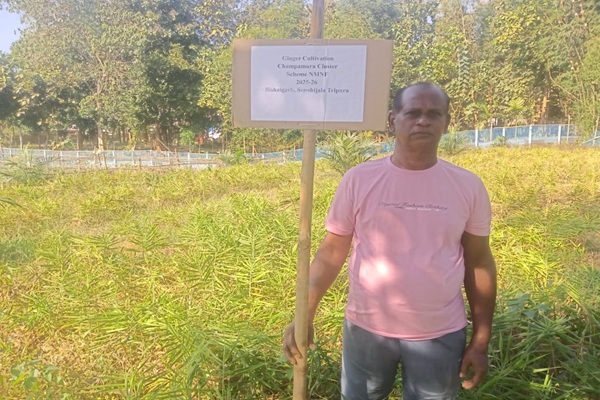

Natural farming is steadily transforming Tripura’s rural landscape, and Champamura village in Sepahijala district has emerged as one of the state’s finest examples of this green revolution. Here, farmers have turned away from chemical fertilizers and pesticides, embracing a cultivation model rooted in cow dung, cow urine, and other organic inputs. The results have been remarkable—higher yields, lower production costs, and revitalized soil health.
In Champamura, more than 232 families have fully adopted natural farming practices. They are cultivating rice, pulses, vegetables, and millets with noticeably improved taste and nutritional value. Farmers report significantly reduced pest attacks and strong market demand for their organic produce, which fetches higher prices compared to chemically grown crops.
Progressive farmers such as Biswajit Natta, Manik Laskar, Babul Natta, and Shibu Shil have become local examples of success. Their use of intercropping, mulching, and organic pest-control methods has shown how sustainable practices can enhance productivity while conserving water and reducing dependence on external inputs. Their fields demonstrate that ecological farming can be both profitable and environmentally responsible.
Women have played a vital role in driving this transformation. Self-help groups led by local resident Archana Natta are actively training villagers, promoting natural-farming techniques, and helping create direct market linkages for organic products. Their efforts have strengthened community participation and empowered rural households economically.
Supporting this grassroots movement, the state agriculture department and the Tripura Natural Farming Scheme are providing training, subsidies, and certification to encourage wider adoption. These initiatives are ensuring that farmers have the technical knowledge and institutional support needed to sustain the shift.
Champamura’s success story is proving that natural farming can build resilient livelihoods, restore ecological balance, and offer a viable alternative amid climate challenges and rising chemical dependency. The village is now inspiring neighbouring communities across Tripura to embrace a cleaner, healthier, and more sustainable future.