

The simmering clash between politics and the media in Tripura has taken a sharper and more public turn, moving beyond social media exchanges into the pages of print journalism. What began as a provocative Facebook post by a senior political figure has now triggered a strong counterattack from a leading regional daily, highlighting growing tensions between elected representatives and journalists in the state.
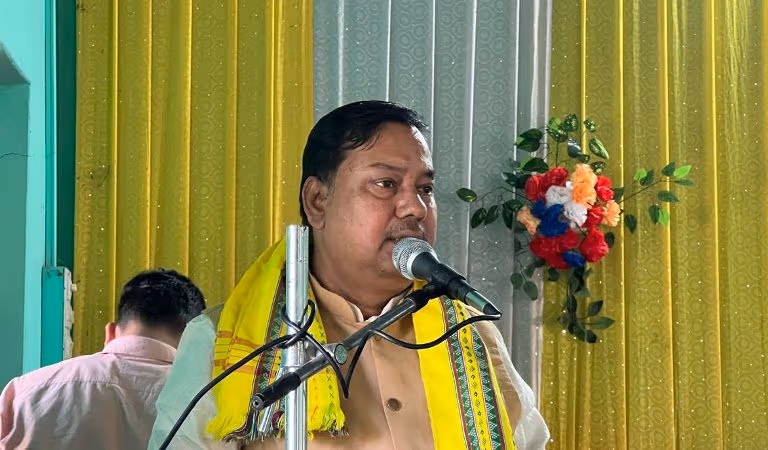
Recently, Deputy Speaker of the Tripura Legislative Assembly, Ram Prasad Paul, posted a strongly worded message on his Facebook page. In the post, written in Bengali, Paul alleged that certain individuals who appear as newspaper vendors or intellectuals in public transform into a “mafia group” in the shadows, extracting lakhs and crores of rupees as commissions from contractors. He questioned how long this alleged culture, which he described as spanning nearly three decades, would continue. Paul further asserted that corrupt contractors would not be allowed any space in the Suryamaninagar Assembly constituency.
Although the post did not name anyone directly, its sweeping allegations were widely interpreted as targeting sections of the media. The remarks sparked outrage within journalistic circles, with many viewing them as an attempt to malign the profession without substantiated evidence.
Responding to the allegations, Tripura’s leading morning daily Aajker Fariad published a strongly worded editorial on December 11, titled “To the Hon’ble Deputy Speaker.” The editorial directly challenged Ram Prasad Paul to substantiate his claims. It questioned whether the Deputy Speaker could provide concrete proof to support his accusation that a journalist was involved in a commission racket worth lakhs and crores linked to government contracts.
The editorial went a step further, asking whether Paul was prepared to ensure legal action against the alleged “mafia journalist,” including imprisonment, if such serious charges were indeed true. By doing so, the newspaper demanded accountability and evidence, underscoring the principle that allegations of corruption must be backed by facts.