
Kanchanpur, March 9: Pradyot Kishore Debbarman, supremo of the Tipra Motha Party and Member of District Council (MDC), on Monday reiterated his commitment to restoring the rights and ownership of the Tiprasa community in Tripura, while emphasizing that Bengalis and Tiprasas must enjoy equal socio-economic and political status.
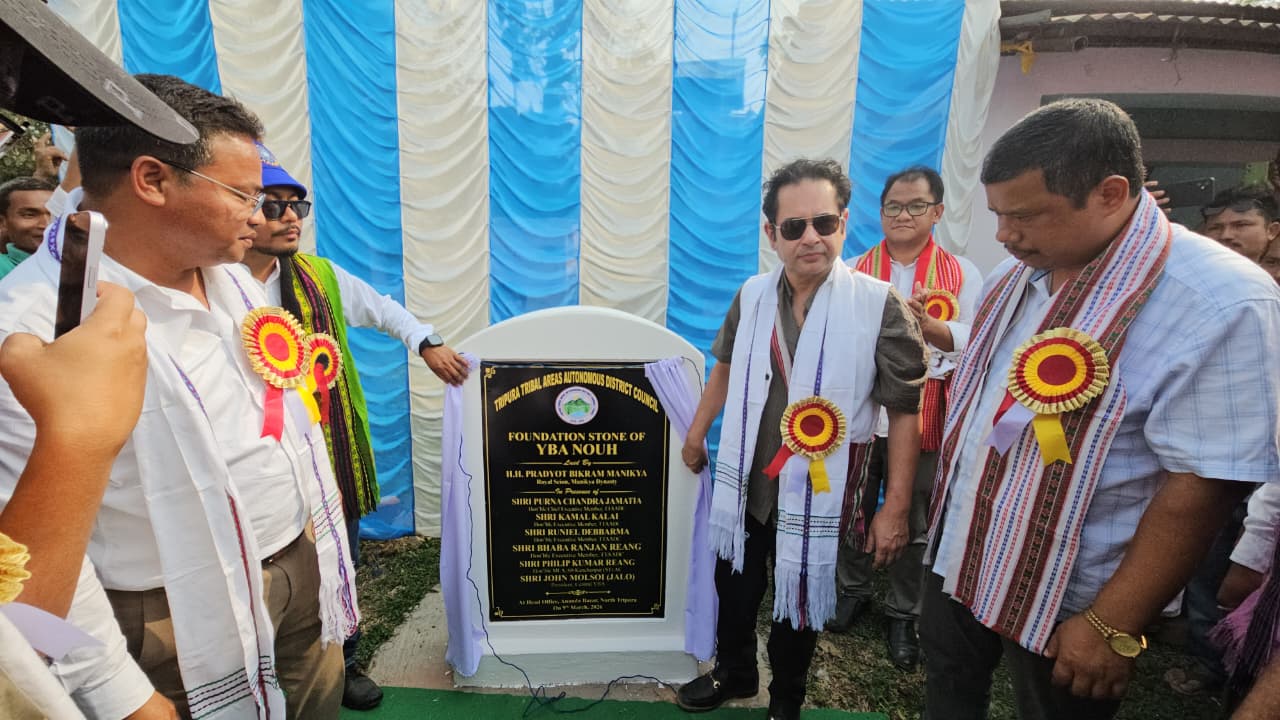
Addressing a gathering at the foundation stone laying ceremony of a 500-seat community hall at Anandabazar in Kanchanpur, Debbarman stated that he would never accept a “master-servant relationship” between Bengalis and Tiprasas.
“Our real fight is to reclaim our rights, lift the Tiprasa community out of poverty, and restore their ownership in Tripura,” he said. Referring to recent slogans raised about ownership of certain areas, he questioned such claims and pointed out that Kanchanpur itself is named after his grandmother, Maharani Kanchan Prava Devi.
“I have no grudge against Bengalis, but both Bengalis and tribals must be treated equally. They should enjoy the same status. We cannot accept any master-servant relationship. We are friends and we will remain friends,” Debbarman told the gathering.
The Tipra Motha leader said that his remarks reflected his genuine emotions and reiterated that he would continue to fight for the rights and dignity of the Tiprasa community throughout his life.
During the event, Debbarman announced that approximately Rs 4 crore would be spent on constructing the community hall, adding that additional funds would be provided if required to complete the project.
Responding to a demand raised by the Young Bru Association, he also assured that a football ground would be developed in the area through the Tripura Tribal Areas Autonomous District Council (TTAADC). He further promised to install floodlights so that matches could be organized at night.
Debbarman also announced Rs 20 lakh for installing statues of Maharaja Dhanya Manikya and his generals Rai Kwchak and Rai Kosom, who defended the kingdom during the rule of the Manikya dynasty. He urged people to preserve the spirit of “thansa” for the collective empowerment of society.